Answer
Unless you have the HR+ add-on and use its Reimbursements feature (see below), employee reimbursements should not be entered in Lightning Payroll as wages, allowances, bonuses or other pay items. If added to a pay that way, they will be reported to the ATO via Single Touch Payroll (STP), which can misstate an employee’s taxable earnings.
HR+ add-on: if your subscription includes HR+, the Reimbursements tab on a pay is built for this. Reimbursements entered there are not part of gross pay, are not taxable, do not attract super and are not reported to the ATO through STP; they are added to the employee’s payment amount after tax and super are calculated. They appear in your accounting journal (Xero, MYOB or a GL export) once you map Total Reimbursements to a debit and a credit line under Company >> GL Codes; see How Can I Send Data To Xero From Lightning Payroll? See How Do Reimbursements Appear On A Pay And Payslip? and How Do I Configure And Process Reimbursement Claims?
Reimbursements are typically handled separately from payroll (for example, via a direct bank transfer or petty cash), so they are not included in STP reporting.
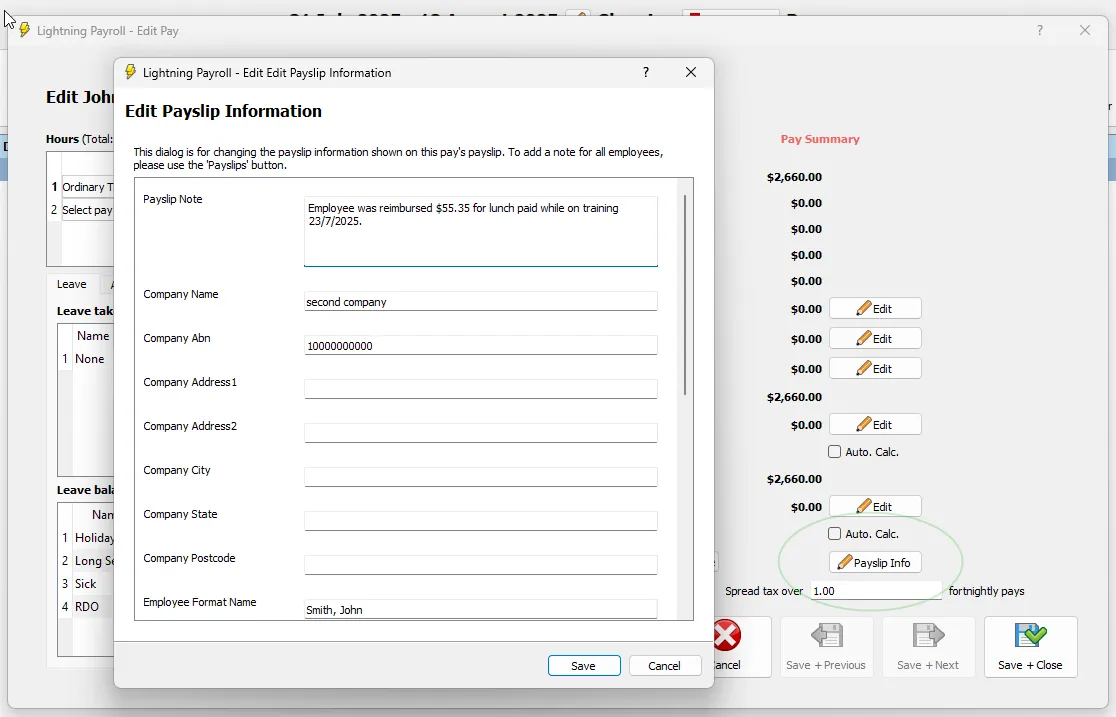
If you want the reimbursement mentioned on the payslip without affecting pay totals or STP, add a payslip note to that pay only:
- Open the employee’s current pay and click Edit Pay.
- Click the Payslip Info button.
- Type your message in the Payslip Note field (e.g. “Reimbursement of travel expenses paid separately”).
- Click Save.
This records the information for the employee while keeping the reimbursement out of payroll figures and STP submissions.